
How I’d Convert and Maximize Income from a 2‑Unit or Condo in South Boston, South End, and East Boston (Permits, Financing, and Rent Outlook for Fall 2026–Early 2027)
10/12/26
My step‑by‑step playbook for Boston owners: how to confirm legal occupancy, pull the right permits, register and inspect rentals, navigate lead/asbestos rules, line up financing for 2–4 units or condos, and build a realistic rent pro forma using current neighborhood data.
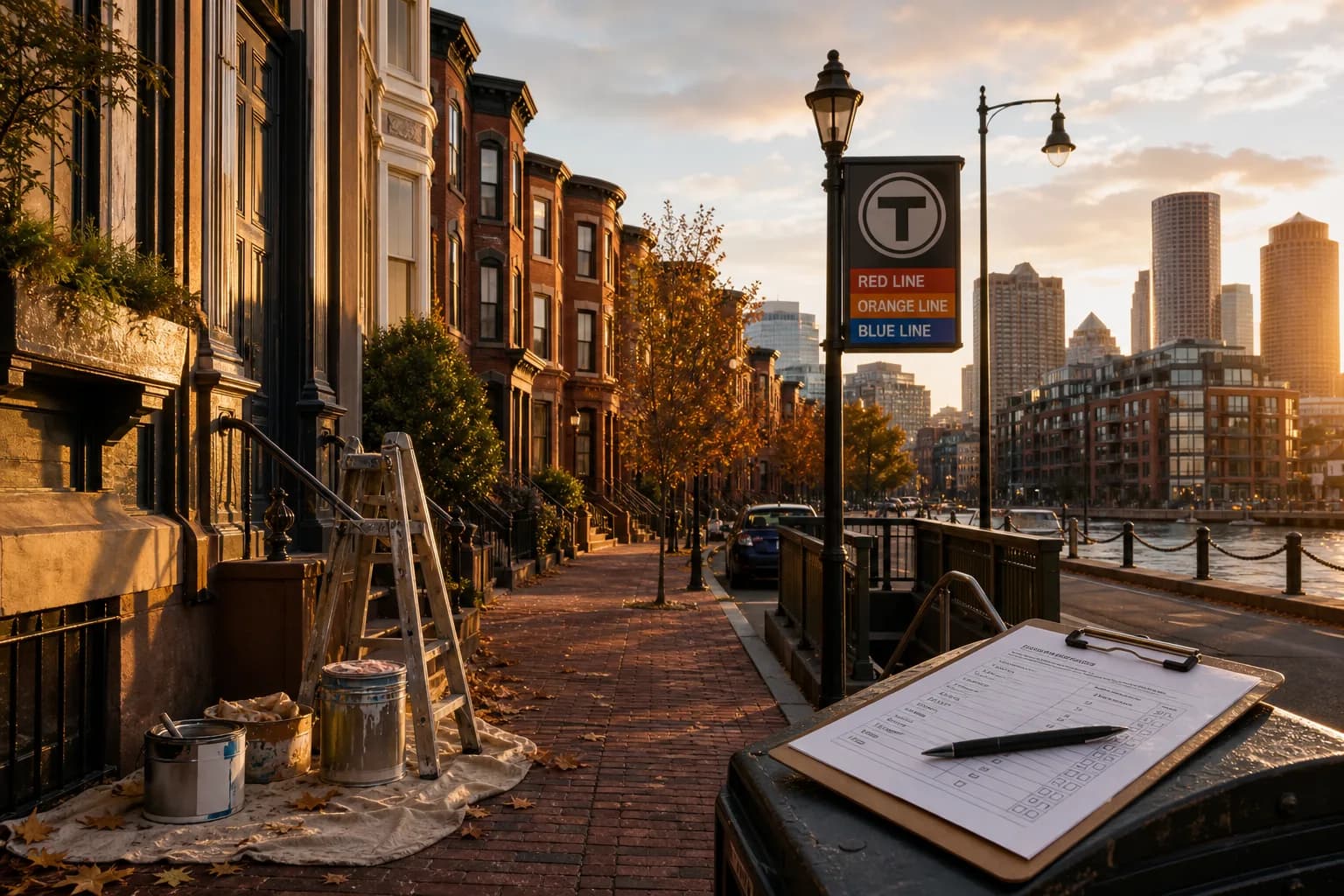
I’m Benji test, a Real Estate Enthusiast based in Boston. Here’s the exact, local process I’d follow to legally convert and rent out a 2‑family or a condo in South Boston, the South End, or East Boston—and how I’d project income for late 2026 into early 2027.
Neighborhood snapshot: why building type matters for your plan
- South Boston: Lots of triple‑deckers and renovated two‑families west of the Seaport, plus newer condo buildings and luxury stock closer to the waterfront. Layouts, basement conditions, and parking vary street by street—so unit count, ceiling heights, and egress often decide what’s rentable with minimal work.
- South End: Historic brownstones and association‑run condos dominate. Expect stronger HOA rules about leasing terms (minimum lease length, move‑in fees, pet policies) and occasional limits on in‑unit remodeling that affects building systems or common elements.
- East Boston: Mix of older two‑ and three‑families, mid‑rise elevator buildings, and waterfront development. Parts of 02128 sit in FEMA flood zones and in areas flagged by Climate Ready Boston for longer‑term sea‑level rise exposure—something I factor into insurance and resilience costs. (ccn.web.tr)
The legal path: permits, registration, and inspections (Boston‑specific)
Here’s the sequence I use to keep a conversion or rental activation clean and compliant in Boston.
- Confirm legal occupancy and zoning before you swing a hammer
- Look up the current legal use/occupancy in ISD records and compare it to what you plan. A change of occupancy (for example, adding a dwelling unit or legalizing a basement apartment) can require a Long‑Form permit and zoning relief through the Zoning Board of Appeal (ZBA). Start with the City’s “Change the Use of a Building or Space” guidance and the ZBA pages. (content.boston.gov)
- For minor interior work that does NOT change use, exits, fire protection, or living area, a Short‑Form permit is typical; major alterations or any change of use need a Long‑Form permit. Fee examples: the Short‑Form carries a base fee plus a per‑$1,000 construction cost component. (content.boston.gov)
- Pull the right building permits
- Short‑Form = minor repairs/alterations; Long‑Form = structural changes, additions, or use changes that can trigger plan review and later a Certificate of Occupancy sign‑off. (content.boston.gov)
- Register the rental annually (by July 1) and keep it current
- Boston requires every rental (including condos) to be registered each year with Inspectional Services. Initial registration is recorded in the City’s database, with renewals due by July 1. The municipal code sets fees (initial and annual renewals per unit) and outlines penalties for missing the deadline; the brochure summarizes per‑unit costs and building/complex caps, and the portal handles filings. (codelibrary.amlegal.com)
- Schedule the required rental inspection (five‑year cycle)
- All non‑exempt rentals are inspected on a five‑year schedule. You can book a City inspector or use an authorized private inspector and file the passed report. As of today, City fees show $50 per unit for 1–3 unit buildings, $75 per unit for 4+ units, and $75 per condo unit; filing a private inspector’s passed report is $15 per unit. Exemptions apply (for example, owner‑occupied 1–6 unit buildings are exempt from routine inspections but not from registration). (boston.gov)
- Lead paint and asbestos checkpoints for older buildings
- Lead: For homes built before 1978, Massachusetts Lead Law requires specific disclosures on rental, and if a child under six resides, the unit must be made lead‑safe—often by deleading or interim controls performed under state rules. (mass.gov)
- Asbestos: Before renovation or demolition, Massachusetts requires an asbestos survey and, if needed, proper notification/abatement through MassDEP. This frequently comes up on older triple‑deckers and brownstone basements. (mass.gov)
- Short‑term vs. long‑term rentals
- Boston’s Short‑Term Rental (STR) ordinance restricts STRs to specific owner‑occupied categories and requires an active City registration number on any listing. Many condos ban STRs in their governing documents. If your goal is year‑long leases, stick to the long‑term rental registration/inspection track. (content.boston.gov)
- Condo‑specific step: read your governing documents
- In the South End especially, review the Master Deed, Declaration of Trust/Bylaws, and rules for leasing limits (minimum terms, caps, move‑in procedures). Massachusetts condo law (c.183A) leaves these rules to the condo’s governing documents, so I always request the latest recorded version before modeling rent. (mass.gov)
Financing primer: 2–4 units and condos (owner‑occupied vs. investor)
Here’s how I frame loan options when I’m modeling numbers with clients (you’ll still confirm details with your lender).
- FHA (owner‑occupied): You can buy 2–4 units with 3.5% down, but 3–4 unit purchases must pass FHA’s self‑sufficiency test (the market rents for the property need to cover principal, interest, taxes, and insurance under HUD’s formula). This is a common house‑hack path for two‑ to four‑families. (hud.gov)
- MassHousing (owner‑occupied): Programs are for primary residences only for the life of the mortgage, with required homebuyer education—and for 2–4 units, landlord counseling is part of the track. (masshousing.com)
- Conventional (owner‑occupied): Standard conforming options exist for 2–4 units; rental income from the other units may be used to qualify under Freddie Mac/Fannie Mae guidelines. Affordable conventional programs (e.g., Home Possible/HomeReady) can reduce down payment and MI costs for income‑eligible buyers, and they allow 2–4 unit primaries—terms vary, so I always run scenarios with at least two lenders. (sf.freddiemac.com)
- Condos: Lender review of the condo project (budget, reserves, owner‑occupancy, litigation) can affect terms for both owner‑occupied and investor loans. Your lender’s condo review will drive underwriting conditions. (sf.freddiemac.com)
What lenders will ask for
- Recent leases or projected rents (an appraiser’s rent schedule for purchases), two years of tax returns/W‑2s or 1099s, proof of reserves, HOA documents (condos), and evidence of any rent restrictions. If you’re converting occupancy or adding a unit, expect underwriters to ask for permits/CO when applicable (see the City’s CO guidance). (search.boston.gov)
Real‑world costs and timelines I plan for
- City filings and inspections: Rental registration fees are set by ordinance and summarized in the City brochure and portal; inspection fees run $50–$75 per unit depending on building type, with a $15 filing fee for private passed reports. I budget these annually and at turnover. (codelibrary.amlegal.com)
- Permits: Short‑Form permits post a base fee plus a per‑$1,000 construction cost add‑on; Long‑Form projects add design reviews and inspections leading to a Certificate of Occupancy if use changes or systems are impacted. (content.boston.gov)
- Turnover/make‑ready: For Boston apartments, a national 2026 benchmark pegs full turn costs (paint, cleaning, light maintenance) near the upper end of U.S. markets; Boston ranks among the highest. I often see $1,500–$2,500 on a light turn (no flooring or appliance swaps), and more if you repaint full‑unit or tackle small plumbing/electrical fixes. Local contractor guides suggest repaint cycles every 3–5 years. Timeline wise, a clean one‑ to two‑week turn is common when pre‑scheduled. (rentready.com)
Rent outlook and where I pull comps right now
To gauge achievable rent for late 2026/early 2027, I triangulate across multiple, current sources and then narrow to micro‑location and building type:
- Citywide baselines: Apartment List’s October 2026 Boston Rent Report and Zillow’s September 2026 Boston rental trends give the month’s pulse for the whole city. (apartmentlist.com)
- By neighborhood: Current cut‑downs show South End and East Boston above city averages, with South End highest of the three and East Boston benefiting from Blue Line access and new stock. Recent snapshots list South End around the high‑$3,000s on average and East Boston low‑$3,000s, with South Boston between and highly variable by proximity to the waterfront/Seaport. (rentcafe.com)
- Bedroom‑specific examples I keep in my notes (as of early October 2026): South Boston 2‑bedroom averages in the low‑$4,000s across active listings; East Boston 1‑bedrooms just under $3,000. These are asking‑rent snapshots and need to be adjusted for unit condition, parking, and concessions. (apartments.com)
How I build a quick 12‑month pro forma (hypothetical example)
- Scenario: South Boston 2‑bedroom near Broadway (non‑elevator condo), market‑ready, tandem parking, in‑unit laundry. Asking rent comp set: $4,216/month midpoint from October snapshots for comparable 2‑beds. Vacancy/credit loss at 5%; self‑managing (0% management) or 8% if third‑party; turnover reserve $150/month to reflect Boston’s higher make‑ready costs.
- Math (illustrative only):
- Gross scheduled rent: $4,216 × 12 = $50,592.
- Less 5% vacancy/credit: −$2,530.
- Effective rent: $48,062.
- Operating add‑backs (illustrative): HOA $475/mo (−$5,700/yr), insurance $1,600/yr, water/sewer if owner‑paid $900/yr, maintenance reserve $1,800/yr, turnover reserve $1,800/yr. If using third‑party management at 8%, subtract another ~ $3,845/yr.
- Net before mortgage and taxes: roughly $34,000–$38,000 depending on whether you self‑manage and what utilities you cover. This example is clearly hypothetical and based on current asking‑rent data; I always confirm with at least 6–10 comps pulled from MLS, Zillow, and a neighborhood‑level source before advising owners. (apartments.com)
Tip: In addition to active listing portals, use the Boston Housing Authority’s payment standards as a conservative reference point for voucher‑friendly pricing by ZIP (for example, the 2026 2‑BR standard for 02127). It’s not a market‑rate comp, but it’s a useful floor if you may lease with a voucher. (bostonhousing.org)
Neighborhood‑specific cautions I watch for
- South End condos: Read leasing clauses closely (minimum terms, right of first refusal, move‑in windows). Lender condo‑project reviews scrutinize budgets/reserves and owner‑occupancy, which can affect investor loans and refinances. (sf.freddiemac.com)
- South Boston two‑families: Basement headroom/egress, rear decks, and lot coverage trigger permit scrutiny. Changing legal unit count nearly always needs ZBA relief—don’t start a “garden unit” without a path to legal occupancy. (content.boston.gov)
- East Boston flood and insurance: Verify FEMA flood maps for the parcel and review City climate‑resilience materials; expect premiums and lender requirements in mapped Special Flood Hazard Areas and plan long‑term for resilience investments along the waterfront. (ccn.web.tr)
Step‑by‑step: my quick checklist
- Pull your address history and confirm legal occupancy; sketch the scope of work.
- If scope is cosmetic only, file Short‑Form; if structural or changing occupancy/use, plan for Long‑Form and possible ZBA relief.
- Register the unit(s) in the City portal; calendar renewal by July 1.
- Book the rental inspection (or hire an authorized inspector) and file any passed report.
- If pre‑1978, complete lead disclosures and plan deleading/interim controls if a child under 6 will live in the unit; get an asbestos survey before renovation.
- Price the unit using fresh comps, then build a 12‑month pro forma that includes HOA (if condo), insurance, utilities, maintenance, vacancy, and a realistic turnover reserve.
- For financing changes (cash‑out, rate/term, adding a unit), speak with two lenders and ask specifically about FHA self‑sufficiency (3–4 units), MassHousing owner‑occupied rules, and conventional options that count rental income. (content.boston.gov)
A quick Fair Housing reminder
When advertising and screening, follow Massachusetts Fair Housing Law and the Attorney General’s guidance. Source of income, families with children, disability, and other protected classes are covered—and you can’t refuse to rent because a unit may require deleading for a child under six. If you have questions, review the AGO’s Fair Housing pages. (mass.gov)
Want help pressure‑testing your plan?
If you’re in South Boston, the South End, or East Boston and you want a quick eyes‑on walkthrough, permits game plan, or fresh rent comps, contact me—Benji test. I’ll tailor a pro forma to your address, building type, and HOA rules, and I’m happy to coordinate intros to lenders and licensed contractors.
P.S. If you’re just starting to shop or prepping to sell and then rent somewhere else, these posts pair well with this guide:
- Buying a 2‑Unit or Condo in South Boston, South End, and East Boston — My Fall 2026 Checklist (/buy-2-unit-or-condo-south-boston-south-end-east-boston-fall-2026-checklist)
- Fall 2026 Seller’s Guide: How to Prepare and Price a Home in Boston, South Boston, South End, and East Boston (/fall-2026-sellers-guide-boston-south-boston-south-end-east-boston)